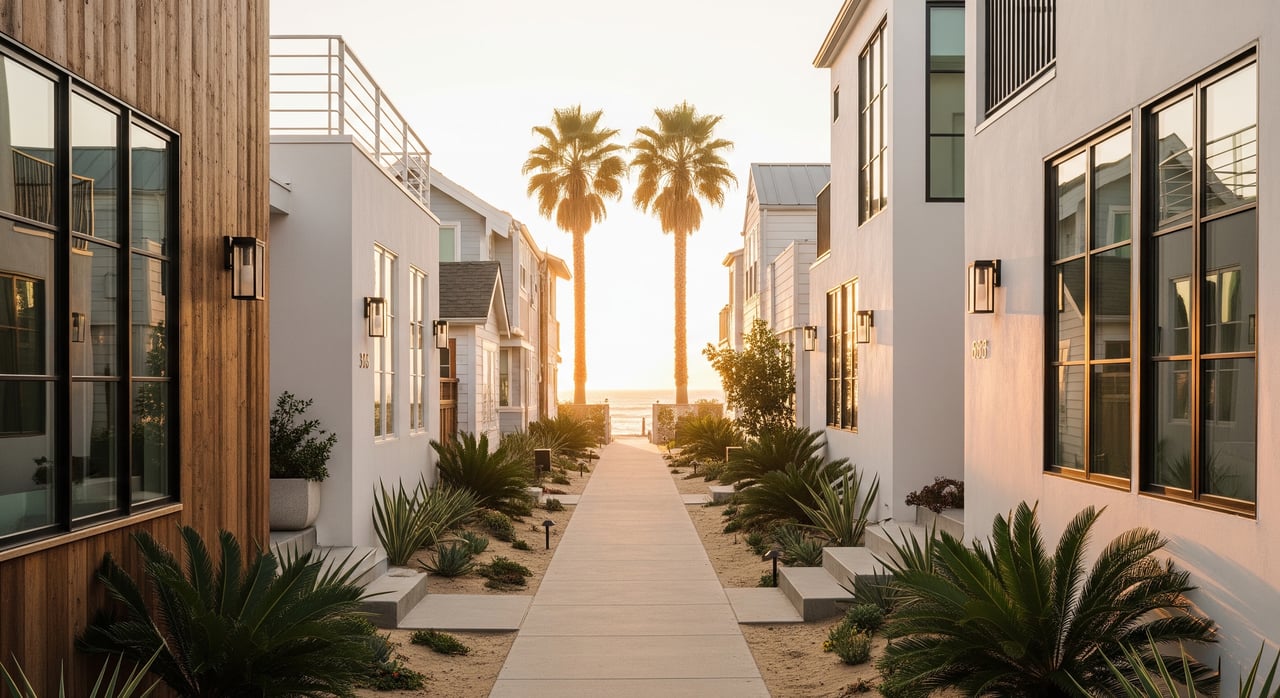
Picture stepping out your front door onto a quiet path where neighbors say hello, bikes glide by, and the beach is only a few blocks away. If you love a coastal lifestyle that favors walking over driving, Venice’s walk streets may be a perfect fit. In this guide, you’ll learn what the walk streets are, the home styles you’ll see, how the pedestrian setting shapes daily life, and what to know before you buy or rent. Let’s dive in.
What are Venice walk streets?
Venice walk streets are narrow, mostly pedestrian-only lanes tucked between the Boardwalk and blocks farther east. Homes face these paths with stoops, small front yards, or porches that open directly onto the walkway. The result is a human-scale, village feel that encourages walking, biking, and neighborly interactions.
These paths are not one continuous route. They form a patchwork of short segments and alleys woven into the street grid. Many trace back to the early Venice of America plan, when canals, promenades, and pedestrian spaces were central to the seaside resort vision.
Most walk streets are public rights-of-way. Maintenance details can vary by block, and some features may be added or cared for by adjacent owners or local associations. For parcel-specific questions about rights-of-way, maintenance, or ordinances, consult Los Angeles Public Works, City Planning, and the Venice Neighborhood Council.
Home styles you will find
Walk-street housing reflects decades of layered development. You will see a mix of original charm and high-design rebuilds on compact lots.
Classic cottages and bungalows
Early 20th-century cottages often show California Bungalow and Craftsman influences. Many have been renovated, while others keep original wood siding and period details. Expect cozy footprints and easy indoor-outdoor flow.
Bungalow courts and cluster homes
Some paths include small clusters of cottages around shared courtyards. These layouts create intimate common spaces and a social, low-key rhythm along the lane.
Two-story narrow builds
To maximize small lots, many homes rise to two stories with a stacked, narrow profile. These often place living areas upstairs for light and privacy, with compact outdoor areas at ground level.
Beach modern rebuilds
Contemporary “beach modern” designs show clean lines, glass, and rooftop decks. Inside, open-plan layouts and sliders connect to patios or balconies for ocean-breeze living.
ADUs and small multi-units
Accessory Dwelling Units are increasingly common as owners add rental or multi-generational space. Duplexes and small multi-units appear nearby, though they are less common right on the tightest paths.
How the vibe shapes daily life
Walk-street living is about access, calm, and community.
Walkability and access
You are typically a short stroll to the sand and the Venice Boardwalk, with many blocks enjoying quick access to Abbot Kinney’s retail and dining. Local bus routes run along the main streets, and biking is popular for short trips. Secure bike storage at home can be valuable.
Quiet paths and front-door living
With limited car traffic, the paths feel calm and social. People walk dogs, chat on stoops, and gather on small porches. The setting supports outdoor time and neighbor connections.
Trade-offs to consider
Tourism near the Boardwalk and Abbot Kinney can bring crowd noise on peak days. Deliveries, moving, and contractor access can be trickier on narrow paths. Street parking near the beach is competitive, and proximity to a public path may reduce privacy. These are normal for the setting, but worth planning for.
Buyer and renter checklist
Use this quick list to evaluate a specific walk-street property.
- Condition and inspections
- Budget for full inspections. Older homes may need electrical, plumbing, roof, termite, or foundation work.
- Earthquake safety matters. Ask about past retrofits and plan for upgrades if needed.
- Coastal and flood risk
- Check FEMA flood maps and local coastal guidance for parcel-specific risk.
- Ask insurers about premiums for coastal properties and whether flood coverage may be required by a lender.
- Zoning and permits
- Confirm zoning for the parcel and allowable uses. Review permit history for remodels or ADUs to avoid future issues.
- Short-term rentals
- The City of Los Angeles regulates short-term rentals and requires registration. Verify current rules before you buy or lease with STR plans in mind.
- Parking and access
- Determine if the home has alley or rear-garage access. Ask about any residential permit zones nearby.
- Test guest parking on a weekend afternoon and a weekday evening.
- Deliveries and services
- Plan for moving trucks and contractor parking permits. Identify the best loading and unloading options.
- Privacy and noise
- Consider landscaping, fencing, and window treatments that fit community norms while improving privacy.
- Community involvement
- Walk the block and meet neighbors. The Venice Neighborhood Council and local groups often engage on walk-street topics.
Market context at a glance
Walk-street properties near the beach and Abbot Kinney usually command a premium compared with inland Venice and many other Los Angeles areas. Demand for both long-term and short-term rentals is strong throughout the year, though STRs are regulated and require registration. Well-located, move-in-ready homes often draw strong interest, and competition can be high.
Touring and evaluating tips
A smart tour gives you a feel for the lane as well as the house.
- Visit at different times of day. Compare weekday mornings to weekend afternoons to gauge foot traffic and noise.
- Test the walk. Time the stroll to the beach, Abbot Kinney, and transit stops to confirm daily convenience.
- Check functional storage. Look for bike, surf, and stroller storage that works with a pedestrian lifestyle.
- Review access. Identify alley access points and how deliveries, moving, or renovations would be staged.
- Look up and around. Note sightlines from the public path and neighboring homes to plan for privacy.
- Assess outdoor areas. Porches, decks, and rooftop spaces matter on compact lots.
How we can help
Buying or selling on Venice’s walk streets takes local insight, planning, and a steady hand. With 25-plus years on the Westside, the Jasan Sherman Real Estate Collective guides buyers, sellers, and investors through inspections, permits, parking logistics, rental considerations, and pricing strategy. Our boutique team also supports rental and tenant placement, investor building management, and relocation assistance.
Ready to explore a walk-street home or position yours for a standout sale? Connect with Jasan Sherman for neighborhood-smart guidance and a calm, results-focused process.
FAQs
Are Venice walk streets public?
- Generally yes, but confirm the status, access, and maintenance for a specific path with Los Angeles Public Works or City Planning.
Is parking available near walk streets?
- Parking is limited near the beach. Many residents rely on street parking or small garages accessed from alleys, with some areas using residential permits.
What home styles are common on Venice walk streets?
- You will see classic cottages and bungalows, bungalow courts, narrow two-story builds, and contemporary beach modern homes, plus increasing ADUs.
Are Venice walk-street homes expensive?
- Yes. Proximity to the beach and Abbot Kinney typically brings a price premium compared with inland Venice and many Los Angeles neighborhoods.
Are there rules for short-term rentals in Venice?
- Yes. The City of Los Angeles regulates STRs and requires registration. Verify the latest rules if you plan to host.
Will I need flood insurance near the beach?
- Possibly. Check FEMA flood maps for the parcel. Lenders may require flood insurance if the property is in a designated flood zone.
How does walk-street living affect privacy?
- Homes open directly to public paths, which can increase street interaction. Landscaping, window treatments, and smart design can improve privacy.
