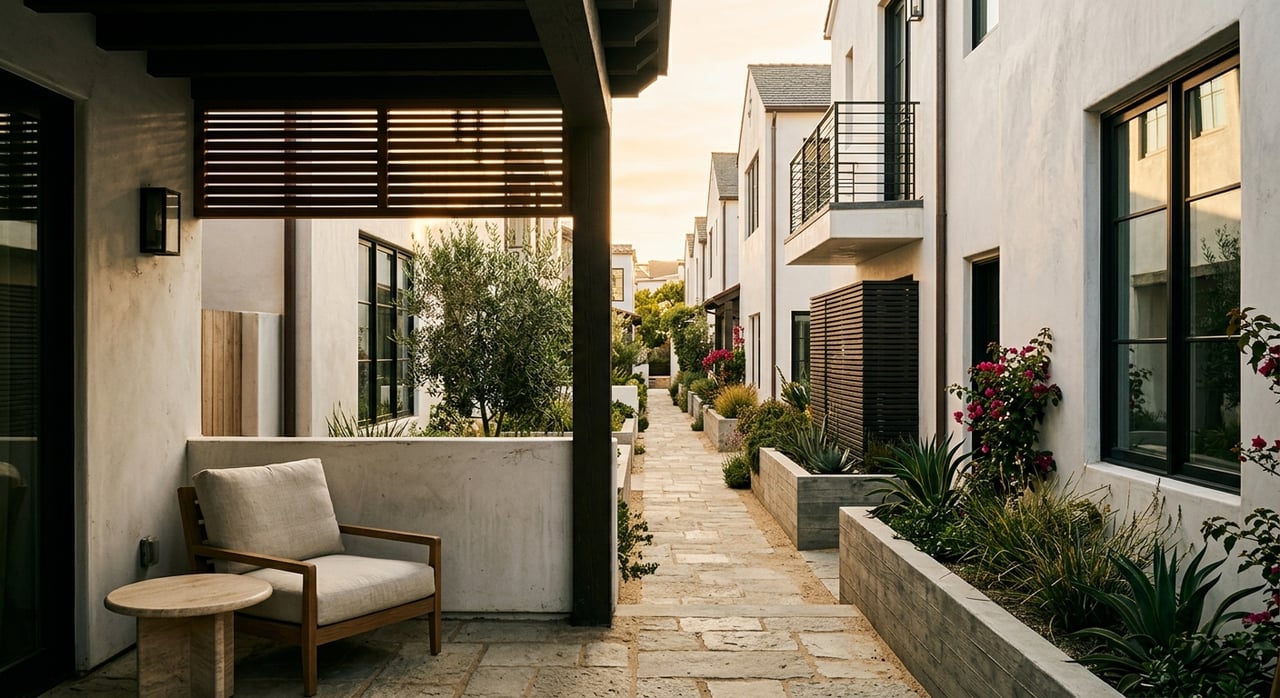
Living in Venice can mean two very different daily experiences, even when the ocean is close in both cases. If you are deciding between the beachfront and the walk streets, the difference is not just about distance to the sand. It is about noise, pace, privacy, architecture, and how public or residential your block feels. Let’s dive in.
Beachfront Living in Venice
The beachfront edge of Venice is the city-facing, public side of the neighborhood. It is centered around Ocean Front Walk and the boardwalk, where the City of Los Angeles identifies a more commercial and pedestrian-oriented environment. In daily life, that means you are living beside one of the most active public spaces in the area.
Venice Beach is also the city’s busiest recreation facility. According to the City, the boardwalk and adjacent property draw about 28,000 to 30,000 daily visitors and more than 10 million visitors each year. Add vendors, performers, restaurants, food venues, the skate plaza, sports courts, bike path, and pier, and you get a setting that feels lively almost all the time.
For some buyers, that energy is the draw. You can step outside and be part of the action right away. If you want a home base that feels plugged into Venice’s recreation and street culture, the beachfront delivers that experience in a way few places can.
Walk Street Living in Venice
Walk streets offer a very different version of Venice. These are not just charming pedestrian paths. The Venice Local Coastal Program treats them as pedestrian rights-of-way, with rules that reinforce a residential, on-foot experience instead of a standard auto-oriented street.
That planning framework shapes how the neighborhood feels every day. Residential development along walk streets is meant to support neighborhood character, with entrances and windows facing the path and only low-impact uses like gardens, patios, landscaping, ground-level decks, and fences in the right-of-way. In simple terms, the design encourages a calmer and more residential rhythm.
Historic walk streets in areas like North Venice and Milwood are also tied to the early pedestrian scale of Venice. City planning documents describe them as places that provide access to coastal resources and amenities while preserving that human-scale feel. If you want Venice proximity with a softer daily cadence, walk streets often stand out.
Daily Noise and Activity
Beachfront: Constant Public Energy
On the beachfront, the pace is more public and more eventful. The combination of heavy visitor volume, recreation uses, performers, and food activity means your surroundings are often visually busy and full of movement. Even if you enjoy that atmosphere, it is a meaningful part of everyday life, not just a weekend feature.
This setting can feel exciting and spontaneous. A quick walk can turn into people-watching, beach time, or an unplanned stop along the boardwalk. If you thrive on activity and want your neighborhood to feel animated, that may be a strong fit.
Walk Streets: Quieter Residential Rhythm
Walk streets tend to feel more buffered from the public intensity of the beach edge. Because the streets prioritize pedestrians and residential frontage, everyday life is shaped more by homes, gardens, patios, and neighbors on foot than by a constant stream of visitors. The result is usually a quieter and more settled block experience.
That does not mean you are far from Venice activity. It means your starting point feels more private and residential. For many buyers, that balance is the appeal.
Architecture and Streetscape
Beachfront: Mixed and Public-Facing
The beachfront reads less like one single residential district and more like a layered public promenade. SurveyLA identifies pedestrian infrastructure on Ocean Front Walk, including shade structures with seating, and notes residential properties there that range from Craftsman to late modern architecture. That mix gives the area a more eclectic visual identity.
Outdoor life here is also strongly shaped by public amenities. Instead of a front garden or quiet porch moment, the defining spaces are often the sand, promenade, pier, bike path, and nearby recreation areas. It feels open, shared, and connected to the beach itself.
Walk Streets: Cohesive Residential Character
The walk streets have a more unified residential identity. SurveyLA describes the North Venice Walk Streets Historic District as made up mostly of one- and two-story single-family and multi-family homes, with many original residences dating from the early 1900s through the 1920s. Craftsman and Victorian vernacular styles are especially common in that historic fabric.
The Local Coastal Program reinforces that look and feel by encouraging articulated facades, porches, bays, balconies, and windows that face the walk street. Semi-private front gardens, patios, and low walls create a transition between the public path and the home. That design gives these blocks a human-scale streetscape that many buyers find appealing.
Access to Dining and Recreation
Beachfront: Recreation at Your Doorstep
If immediate access matters most, the beachfront has the edge. The boardwalk includes restaurants and food venues, along with performers, the skate park, Muscle Beach, sports courts, the fishing pier, and other public recreation amenities. You are living right next to a destination that supports spontaneous plans.
That convenience can be a major lifestyle benefit. A casual evening walk or quick outdoor break can turn into a full beach outing without much planning. For buyers who want the coast to feel active and social, that is a real advantage.
Walk Streets: Residential Base, Easy Access
Walk streets are less commercial on the block itself, but they still sit close to some of Venice’s strongest pedestrian-oriented destinations. The Venice Community Plan identifies Abbot Kinney Boulevard as a unique pedestrian-oriented area with retail shops, restaurants, and art galleries. It also highlights Windward Circle as a historic pedestrian-oriented area with retail, restaurants, a hotel, a bank, a post office, and a medical clinic.
So while walk-street living starts from a quieter residential setting, you can still reach dining, culture, and daily conveniences on foot in many cases. The difference is that the activity is nearby rather than built into your front doorstep. That separation matters more than many buyers first expect.
Which Venice Lifestyle Fits You?
Choosing between these two micro-areas usually comes down to how you want your day to begin and end. If you want spectacle, movement, recreation, and a neighborhood that feels active from morning to night, the beachfront is the clearer match. It offers one of the most public and energetic coastal lifestyles in Los Angeles.
If you want pedestrian charm, residential character, and a stronger sense of separation between home life and visitor activity, the walk streets are often the better fit. You are still close to the coast and Venice destinations, but your block may feel more intimate and less activated by the public realm.
Neither option is inherently better. They simply offer two distinct versions of Venice living. The right choice depends on whether you picture Venice as a front-row seat to the boardwalk or as a quieter residential setting with the beach still close at hand.
If you are weighing homes in Venice and want help matching the right block to your lifestyle, Jasan Sherman can help you compare the details that matter most, from daily rhythm to property type to long-term value.
FAQs
How does daily life on the Venice beachfront feel?
- Daily life on the Venice beachfront feels active, public, and recreation-focused, with heavy boardwalk visitation, performers, food venues, and beach amenities shaping the environment.
How does daily life on Venice walk streets feel?
- Daily life on Venice walk streets feels more residential and pedestrian-focused, with homes, gardens, patios, and a calmer block experience playing a bigger role.
Are Venice walk streets close to restaurants and shops?
- Yes. Walk streets are less commercial on the block itself, but they are close to pedestrian-oriented destinations like Abbot Kinney Boulevard and Windward Circle.
What kind of homes are common on Venice walk streets?
- SurveyLA describes many walk-street homes as one- and two-story single-family and multi-family residences, often from the early 1900s through the 1920s, with Craftsman and Victorian vernacular styles.
Is the Venice beachfront more public than the walk streets?
- Yes. The beachfront is centered on Ocean Front Walk and the boardwalk, which function as a highly visited public-facing corridor, while walk streets are designed around a more residential pedestrian setting.
