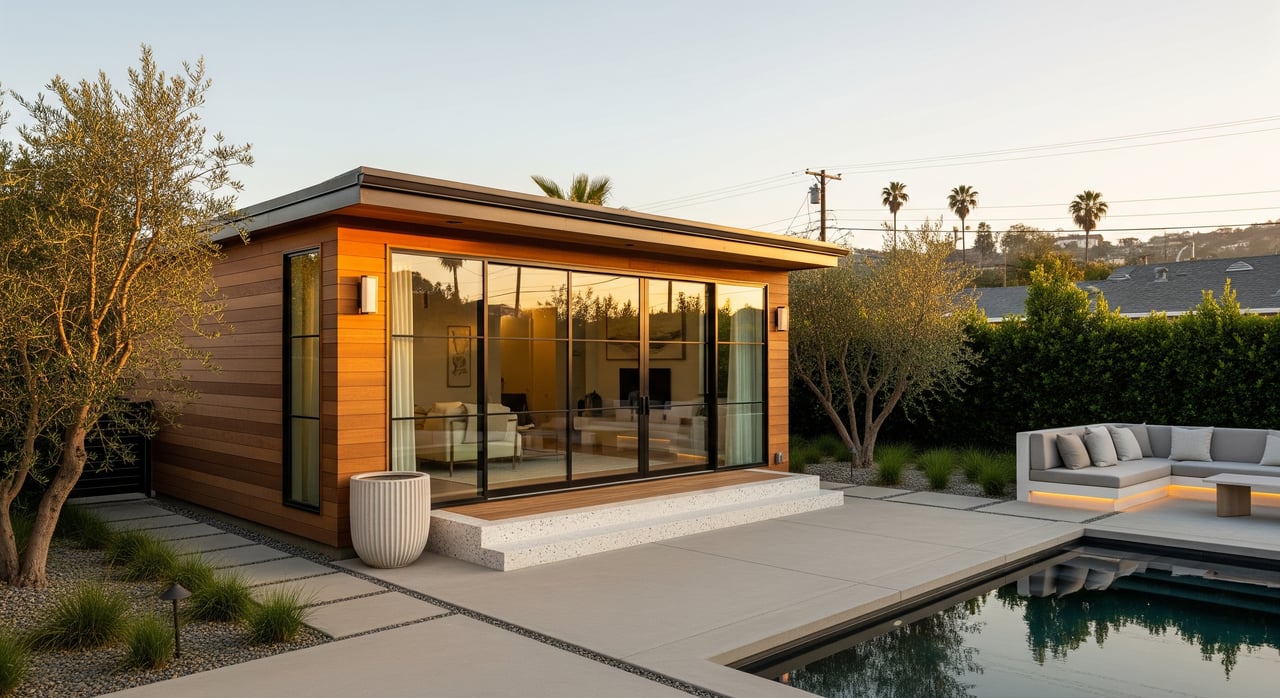
Thinking about adding an ADU to your West LA property but not sure where to start? You’re not alone. Between different city rules, wide cost ranges, and shifting rental markets, it can feel overwhelming. In this guide, you’ll get a clear framework to estimate costs, understand permitting, and model rent scenarios so you can decide if an ADU fits your goals. Let’s dive in.
Confirm your jurisdiction first
Before you sketch a floor plan or call a contractor, confirm which city or county actually governs your lot. “West Los Angeles” spans multiple jurisdictions, including the City of Los Angeles, Santa Monica, Beverly Hills, Culver City, and parts of unincorporated Los Angeles County. Rules, fees, and timelines can vary across these areas.
State basics, local nuance
California’s ADU laws have made approvals more predictable. Most ADUs qualify for ministerial approval without discretionary hearings. The state caps detached ADUs at a maximum of 1,200 square feet and allows Junior ADUs up to 500 square feet when converting space in the existing home. There are limits on parking requirements near transit and restrictions on owner‑occupancy mandates in many cases.
Local cities implement these laws within their own codes. That means maximum size, number of units allowed, and design standards can still differ. Plan‑check timelines and utility authorities can also vary. Always confirm local details before you budget.
What to verify locally
- Allowed ADU type: conversion, attached, detached, or JADU.
- Maximum size, height, setbacks, and lot coverage.
- Maximum number of ADUs per parcel.
- Parking rules and how transit proximity affects them.
- Historic district or HOA review requirements.
- Utility notes: sewer vs septic, meter needs, and which utility agencies serve your address.
Build a realistic budget
Your ADU budget has four parts: soft costs, construction, permits and utilities, and contingency. The right mix depends on your site, the type of ADU, and finish level.
Soft costs to expect
Soft costs cover planning and design before you build. A quick feasibility or site assessment commonly ranges from $500 to $2,000. Architectural, design, and engineering fees vary. Using a pre‑approved plan can keep fees modest, while custom design often runs 8 to 15 percent of construction cost. Surveys, soils reports, and utility coordination can add $1,000 to $5,000 or more depending on complexity.
If you’re in a historic district or under an HOA, expect extra time and cost for reviews. These steps do not add square footage, but they are essential for approvals and accurate bids.
Construction choices and cost drivers
- Garage or interior conversion. Conversions are typically the most cost‑effective because you’re working within an existing structure. Final cost depends on needed upgrades to foundations, roofs, and utilities.
- Attached ADU. Building an addition usually falls in the middle on a per‑square‑foot basis. You can share some systems with the main home, which can help.
- Detached ADU. A new stand‑alone structure tends to be the most expensive due to foundation, roofing, and full utility runs.
- Prefab or modular. Prefab can shorten schedules and sometimes reduce cost, but you still need a foundation, craning or transport, and local customization. Total costs often overlap with traditional builds.
Across Los Angeles, site conditions drive variance. Slopes, soil, large roots, utility locations, and finish level all impact bids. Get at least three local bids from ADU‑experienced builders to anchor your budget.
Permits, fees, and utilities
Municipal building permits and plan‑check fees are typically based on the value of the work. Some jurisdictions offer fee reductions for smaller ADUs, but you should verify current policies. Water and sewer fees can be significant if you need a new meter, a sewer capacity review, or a lateral upgrade. Electrical upgrades or a separate meter may also be required depending on service size and distance.
State law limits some impact fees for smaller ADUs, but exact rules vary by city. Budget for hookup and inspection fees, and be prepared for trenching or easement coordination where needed.
Don’t skip contingency
Older West LA homes can hide surprises. Set aside a contingency of 10 to 20 percent or more for unforeseen conditions like soil issues, asbestos, lead, termite damage, or utility conflicts. A realistic cushion keeps your project on track when the unexpected pops up.
Permits and timeline
Your path to keys follows a predictable sequence. The total time from inquiry to move‑in commonly runs 4 to 12 months, depending on project type and local review times.
Typical steps
- Confirm jurisdiction and zoning basics.
- Complete a site survey and schematic design. If converting, evaluate structural needs.
- Prepare full construction documents and engineering.
- Submit for ministerial planning review and building plan check.
- Address plan‑check comments and resubmit if needed.
- Pull permits, order materials, and schedule your contractor.
- Build foundation and structure, then mechanical, electrical, and plumbing.
- Final inspections and certificate of occupancy where required.
How long it takes
- Feasibility and schematic design: days to weeks.
- Design and permit documents: about 1 to 3 months. Pre‑approved plans can shorten this.
- Plan check and approval: weeks to several months based on workload and corrections.
- Construction: small conversions often 2 to 4 months. Detached ADUs often 4 to 9 months.
Ways to move faster
- Use pre‑approved ADU plans if your city offers them.
- Hire a team familiar with your local plan‑check reviewers and utility processes.
- Start utility coordination early for sewer capacity and meter sizing.
Estimate rent the right way
Project returns depend on realistic rents for your immediate neighborhood. West LA has strong demand, but each submarket is different. A careful comp process helps you price correctly and model cash flow with confidence.
Step‑by‑step rent comps
- Define the product. Note size, bedrooms and baths, private entrance, included utilities, parking, pet policy, and finish level.
- Pull local comps within about a mile. Focus on ADUs, cottages, small apartments, and similar units. Aim for recent data.
- Adjust for differences. Factor in privacy, parking availability, finishes, and amenities.
- Check rent per square foot and total rent. Estimate a realistic vacancy rate.
- Default to long‑term rentals unless your city clearly allows short‑term with registration.
Local rent drivers in West LA
Proximity to major employers, transit, and commercial corridors supports higher rents. Areas near UCLA, Silicon Beach, or coastal amenities can command premium pricing. In car‑dependent pockets, limited private parking can reduce demand. If you are close to frequent transit, that can offset parking concerns for some renters.
Model three rent scenarios
Use a simple template to see how rent affects your returns. Below is an example framework for a 600 square foot 1‑bedroom ADU with 90 percent occupancy and a 30 percent operating expense ratio. Operating expenses typically include property taxes, insurance, utilities you pay, maintenance, and management.
- Gross monthly rent: your assumed monthly rent.
- Annual gross rent: monthly rent × 12 × 0.90 occupancy.
- Operating expenses: annual gross × 0.30.
- Net Operating Income (NOI): annual gross − operating expenses.
- Cap rate: NOI ÷ total project cost.
- Cash‑on‑cash return: (NOI − annual debt service) ÷ cash invested.
Conservative scenario
Assume a more modest rent based on older finishes or a less central location. Expect lower monthly cash flow and a longer payback period. This scenario helps you stress‑test your downside.
Moderate scenario
Use a typical market rent for a 1‑bedroom in your mid‑West LA neighborhood. You should see balanced cash flow and a reasonable cap rate. This is a good baseline for planning.
Aggressive scenario
Assume premium finishes and a strong submarket close to major employment or amenities. Your modeled rent will be higher. Expect stronger cash flow and a faster payback if construction costs are controlled.
Financing and incentives
You can fund an ADU in several ways depending on your equity and risk tolerance. Common options include cash, a cash‑out refinance, a home equity line or loan, and construction‑to‑permanent loans. Government‑backed renovation products and private lenders with ADU programs may also be available.
Check for any current city or regional incentives, such as grants, fee reductions, or pre‑approved plan programs. These programs change over time and may target affordable units. If you plan to rent the ADU, speak with a tax professional about rental income, allowable deductions, and depreciation. Adding an ADU can affect assessed value. Confirm local property tax treatment with the county assessor.
Risks and how to reduce them
ADU projects in West LA face some common hurdles. Utility connections can be costly, especially for sewer laterals or new meters. HOA or historic reviews can add time. Construction markets can shift, which affects pricing and availability.
Mitigate risk by confirming your jurisdiction and feasibility early. Work with a contractor and design team who understand local approvals and utilities. Get multiple bids and include a healthy contingency. Explore pre‑approved plans or modular options to tighten timelines. If you plan to rent, consult legal and insurance advisors about leases, liability, and landlord coverage.
Your West LA action plan
- Confirm your exact city or county and review ADU rules for that jurisdiction.
- Do a quick feasibility check: lot size, setbacks, parking, sewer availability, and any HOA or historic status.
- Pull neighborhood rent comps within about a mile for your target unit size.
- Request three preliminary bids, including at least one from an ADU specialist.
- Run conservative, moderate, and aggressive financial models using the template above.
- If moving forward, schedule a site inspection and get a proposal that lists likely permit fees and utility work.
- Speak with a CPA about rental income and with your insurance agent about landlord coverage.
How we can help on the Westside
You do not have to navigate this alone. With deep Westside experience, we help you pressure‑test rent assumptions, understand neighborhood demand, and plan for tenant placement and ongoing management. If you want to explore how an ADU could fit into your long‑term strategy, we’ll bring local comps, practical timelines, and a clear next‑step plan.
Ready to evaluate your options or value impact? Connect with Jasan Sherman for neighborhood‑specific guidance.
FAQs
What should a West LA homeowner check before planning an ADU?
- Confirm your governing jurisdiction, then verify allowed ADU types, maximum size, setbacks, parking rules, and any HOA or historic requirements.
How long does an ADU take from concept to move‑in in West LA?
- The total timeline is commonly 4 to 12 months, with 1 to 3 months for design, weeks to months for plan check, and 2 to 9 months for construction depending on scope.
What ADU type is usually most cost‑effective in West LA?
- Garage and interior conversions are often the most cost‑effective, attached ADUs are mid‑range, and detached new builds typically cost the most per square foot.
What permitting and utility fees should I plan for in Los Angeles?
- Budget for building permits and plan‑check fees, potential water and sewer connection or capacity charges, possible electrical upgrades, and inspection and hookup fees.
How do I estimate rent for a new ADU in my West LA neighborhood?
- Define your unit, pull nearby comps within about a mile, adjust for differences, check rent per square foot and total rent, and assume a reasonable vacancy rate.
Are short‑term rentals allowed for ADUs in West LA cities?
- Many cities restrict short‑term rentals and require registration. Treat long‑term rentals as the default unless your city clearly allows short‑term use.
Will building an ADU change my Los Angeles County property taxes?
- Adding an ADU can affect the assessed value as an improvement. Confirm current rules with the county assessor and consult a tax professional.
